

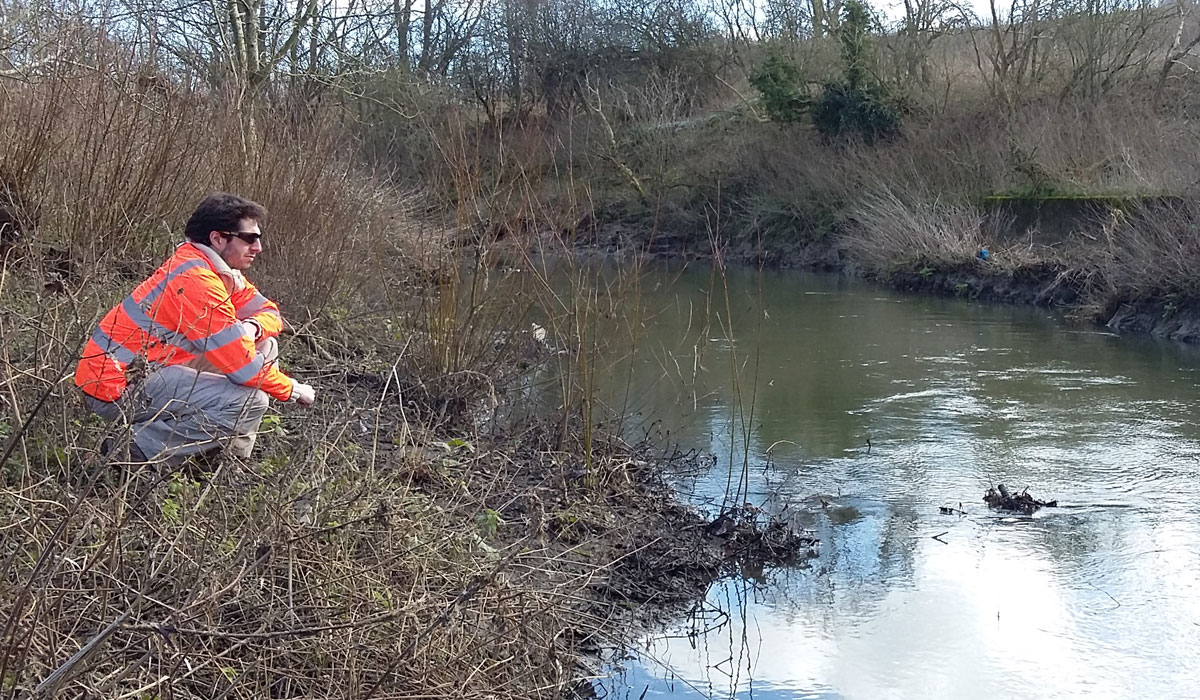
This winter, Kent, Sussex and surrounding counties in the South East of Britain has seen its fair share of flooding over recent years, impacting people’s homes and livelihoods. Predictions for future weather conditions show an increase in rainfall, producing a much wetter climate for the UK!
Land or property owners near to a river, stream, ditch or any other slow moving water body such as a pond, lake or reed bed may be required to manage these inland watercourses, in response to these threats. If so you may be required to carryout ecological surveys for protected species such as the white clawed crayfish, great crested newts, otters and water vole.
The water vole is a European protected species under the Wildlife and Countryside Act, 1981. They are similar in size to our brown rat with an average life span of 1.5 years. They typically inhabit slow moving water bodies with plenty of vegetation cover for foraging and cover from predators such as herons, owls and the introduced American mink.
Kent is one of the hotspots for water vole distribution due to having one of the largest networks of ditch systems in the UK that are so vital to their survival. When numbers are depleted in one system due to habitat degradation or predation, recolonisation from surrounding ditch systems can occur when connected to other ditch systems. That being the case, there is a chance water voles’ may be present in the water systems under your ownership.
PJC Consultancy is located in Kent and Sussex and can provide advice on water vole habitat enhancement and mitigation strategies. With spring on its way, now is the perfect time to prepare for those surveys!